
Choosing the Right Buttons for Apparel Brands: Materials, Uses, and Style Tips
Buttons may look like small details, but they can quietly change the whole feeling of a garment. A shirt can look clean and easygoing with simple plastic buttons. A winter coat can feel warmer and more natural with horn button or wooden buttons. A denim jacket, workwear piece, or premium uniform can instantly feel stronger with well-made metal buttons.
For apparel brands, choosing the right buttons is not only about color or size. It is also about material, durability, washing performance, garment style, budget, and brand positioning. If you are developing a new clothing line, the right button supplier should help you match the button material to the actual use of the garment, not simply recommend what looks good in a sample box.
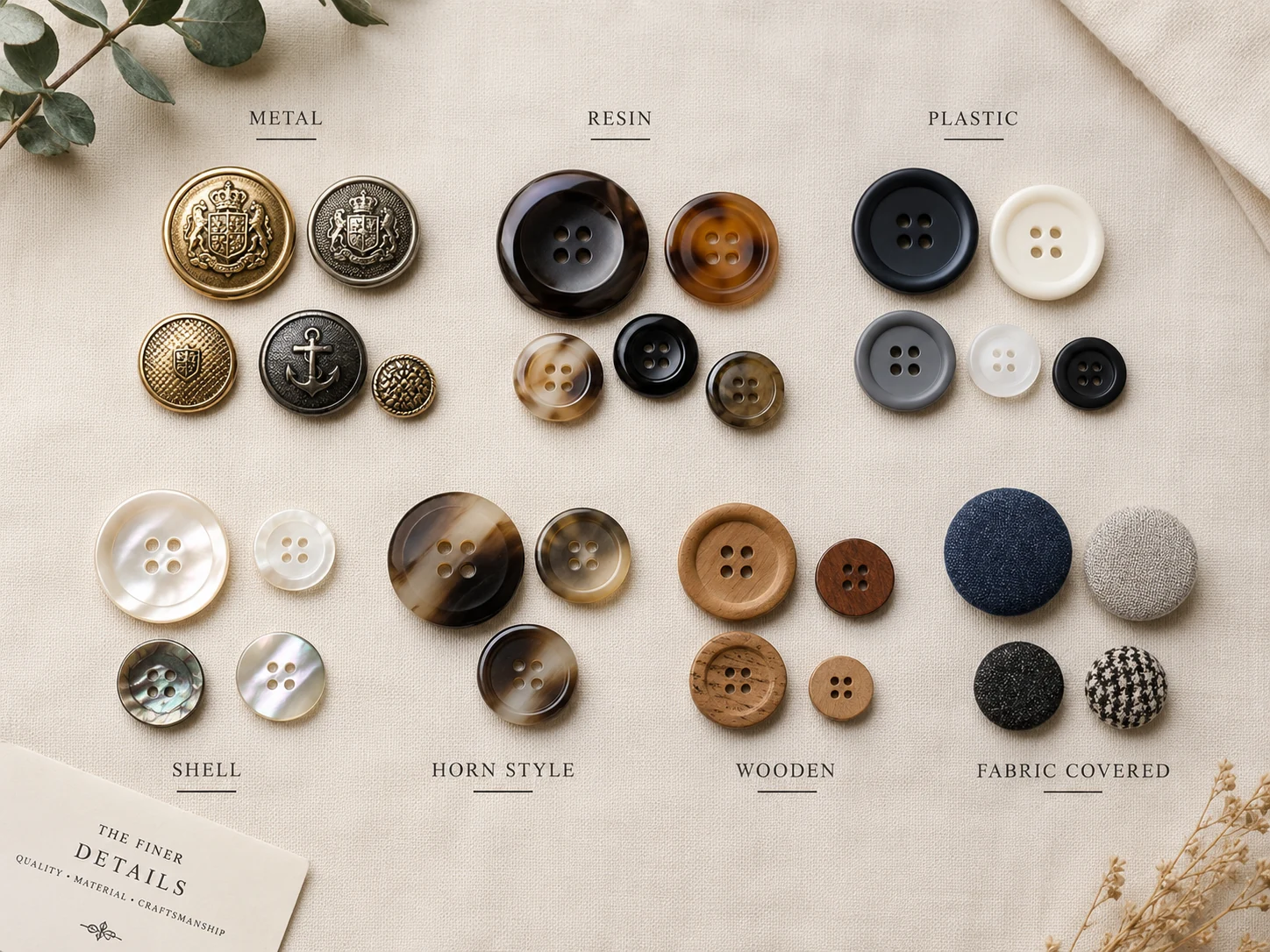
Why Button Material Matters
Different button materials have different textures, physical properties, costs, and visual effects. The document highlights resin, metal, shell, wood, horn, leather, and fabric-covered styles as common choices for everything from casual daily wear to high-end custom apparel.
A good button choice should support the garment instead of competing with it. Lightweight shirts need comfortable and washable buttons. Outerwear needs stronger pieces that can handle repeated pulling. Luxury shirts and womenswear often need refined surfaces. Casual collections may care more about color flexibility and cost control.
Common Button Materials and Where They Work Best
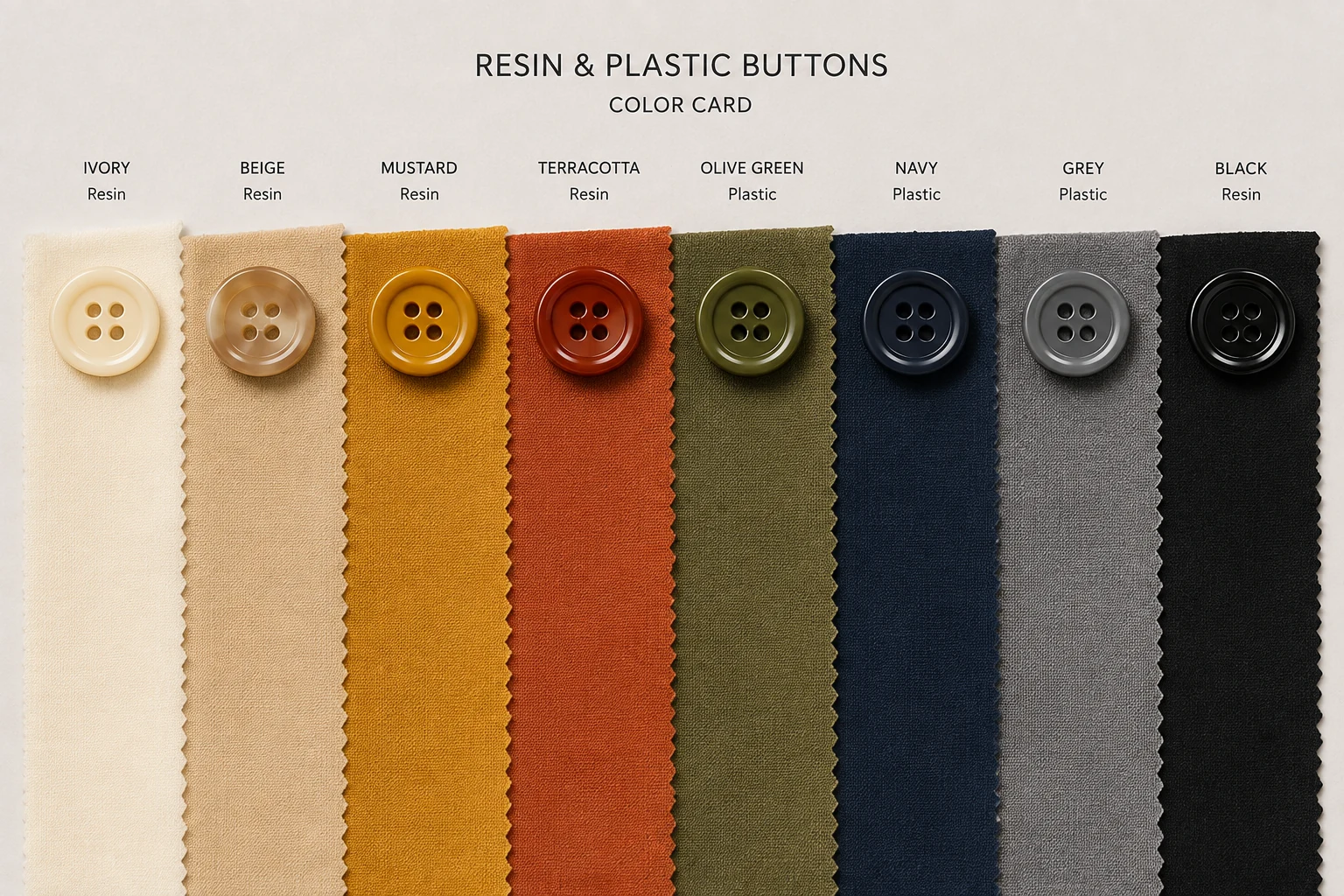
Resin buttons and plastic buttons: light, colorful, and practical
Resin buttons and plastic buttons are among the most widely used choices for everyday apparel. They are lightweight, available in many colors, and usually more cost-friendly for large-volume orders. They can also be made in different shapes, surface textures, and translucent effects, which makes them useful for fashion collections that need quick color matching.
Best for: daily shirts, T-shirts, kidswear, uniforms, casualwear, and mass-market garments.
If your collection has many colorways, resin buttons and plastic buttons can be a flexible option because they are easier to match with fabric shades and seasonal palettes.
Metal buttons: strong, durable, and full of character
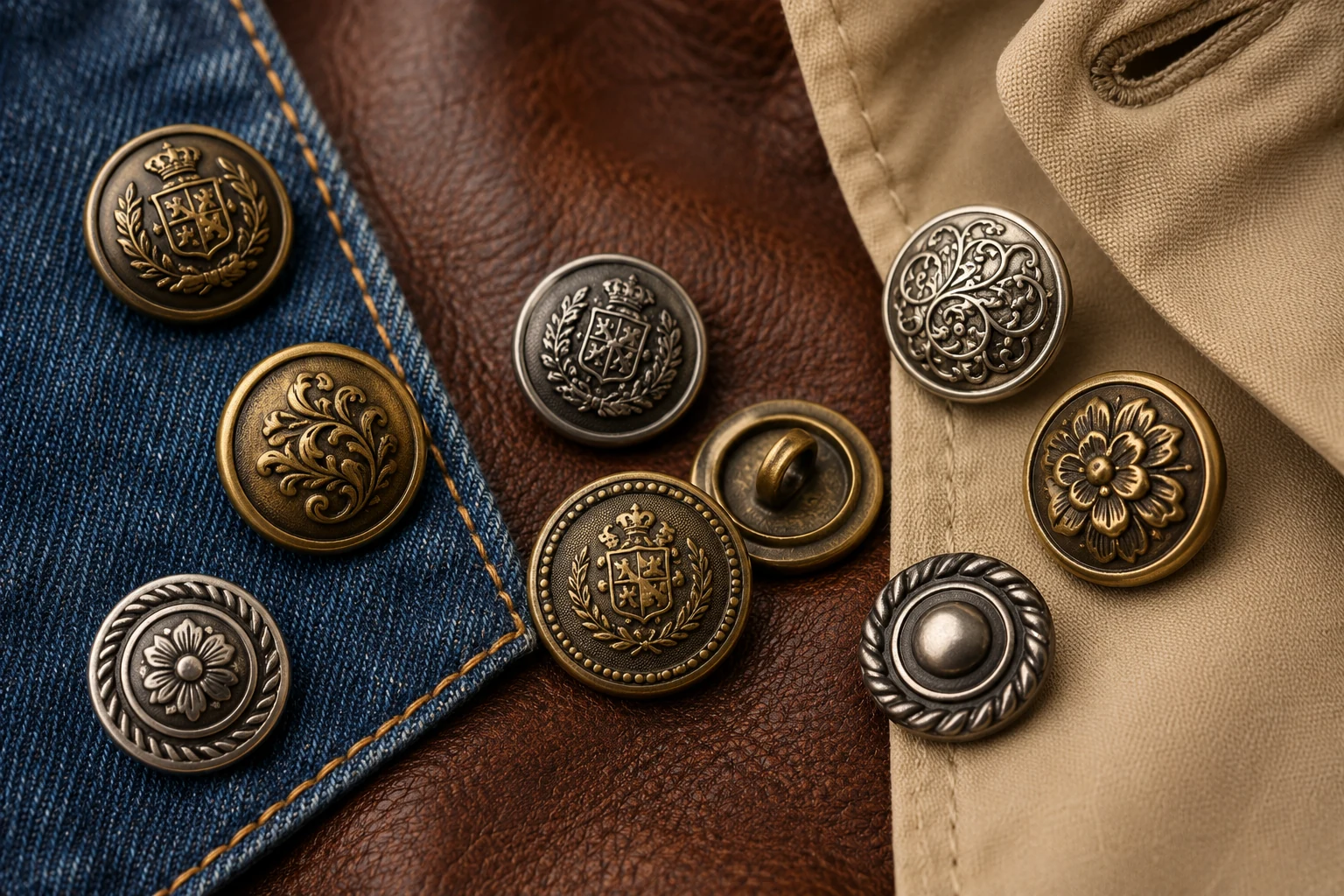
Metal buttons are a strong choice when the garment needs a more structured, premium, industrial, or vintage look. Brass, zinc alloy, and stainless steel are common materials. Compared with lightweight buttons, metal buttons feel more solid in the hand and can support a stronger brand identity.
They are especially suitable for jeans, workwear jackets, trench coats, leather jackets, military-inspired clothing, and premium uniforms. For brands that want a product to feel more durable and more valuable, metal buttons can help create that first impression before the customer even tries the garment on.
Metal buttons can be customized with embossed logos, engraved details, antique finishes, brushed surfaces, matte plating, shiny plating, or special shapes. This makes them useful not only as functional fasteners, but also as visible branding details.
Shell buttons: natural shine for refined garments
Shell buttons are valued for their natural pearl-like luster. They feel elegant and are often chosen for higher-end shirts, formal menswear, and light summer womenswear. Their surface has a soft shine that cannot be fully copied by plastic.
Best for: premium shirts, formal shirts, resortwear, silk blouses, lightweight dresses, and refined summer garments.
Because shell buttons are natural and relatively brittle, they are better for garments where elegance matters more than heavy-duty stress. For rough-use garments, brands may want to consider resin buttons, plastic buttons, or metal buttons instead.
Tortoise shell buttons: classic pattern with a warm vintage feel
Tortoise shell buttons are often used when a brand wants a warm, patterned, vintage-inspired look. Today, many styles are made with resin or other imitation materials to recreate the tortoise-shell effect in a more practical and scalable way.
Best for: blazers, coats, cardigans, womenswear, resort shirts, and retro-inspired collections.
Tortoise shell buttons work especially well with beige, brown, olive, navy, cream, and other classic fabric colors. They add detail without feeling too shiny or loud.
Horn button and wooden buttons: natural texture for coats and knitwear
Horn button and wooden buttons bring a warmer, more natural feeling to apparel. They are often associated with autumn and winter clothing, wool fabrics, cardigans, duffle coats, and designs that want a more organic or handcrafted tone.
Best for: wool coats, winter jackets, knit cardigans, duffle coats, natural-style fashion, and outdoor-inspired collections.
For brands built around natural materials, slow fashion, or heritage styling, horn button and wooden buttons can strengthen the story of the garment.
Fabric covered buttons: soft, seamless, and elegant
Fabric covered buttons are made by wrapping the button with the same fabric, leather, or a matching material. This creates a softer and more integrated appearance, so the button becomes part of the garment instead of standing out as a separate element.
Best for: wool suits, tailored coats, premium womenswear, winter coats, eveningwear, and garments that need a clean, tonal finish.
Fabric covered buttons are a good choice when the garment shape, fabric, or silhouette should stay as the main focus.
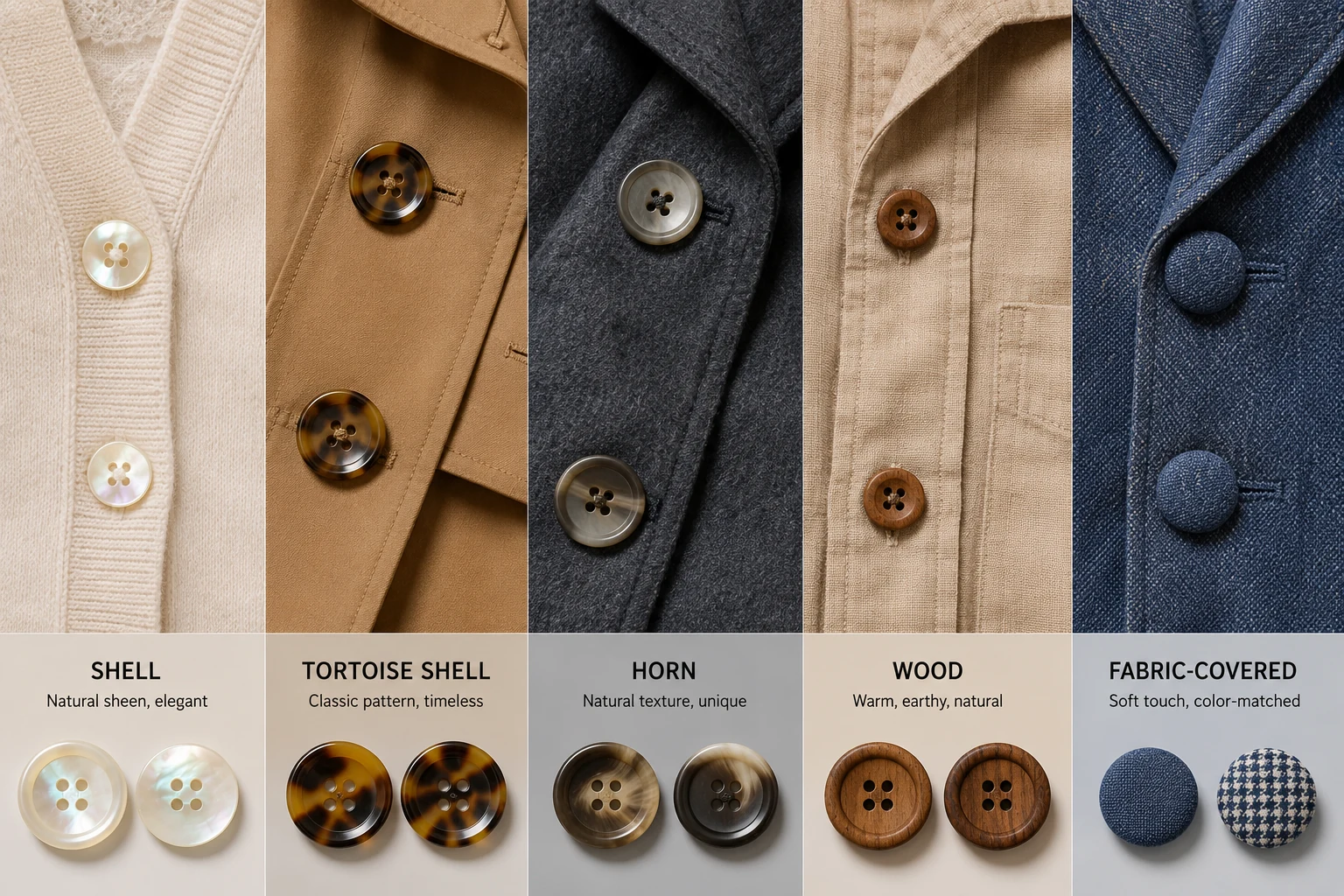
How to Match buttons with Different Garment Types
For shirts and lightweight tops, choose resin buttons, plastic buttons, or shell buttons depending on the price point and style. For jeans, leather jackets, and workwear, metal buttons are usually a better fit because they look stronger and can handle more wear. For coats and knitwear, horn button, wooden buttons, and fabric covered buttons can make the garment feel warmer and more premium.
If your brand direction is modern and minimal, simple plastic buttons, smooth resin buttons, or matte metal buttons may work well. If your style is classic or vintage, consider antique metal buttons, tortoise shell buttons, horn button, or wooden buttons. If your line is more formal, shell buttons or tonal fabric covered buttons can create a cleaner finish.
What to Ask Your button supplier Before Production
Before placing an order, it helps to send your button supplier clear information about the garment type, fabric thickness, button diameter, color, finish, logo requirement, quantity, sample deadline, and bulk delivery schedule.
You can also ask whether the button supplier can provide material suggestions, plating options for metal buttons, color matching for resin buttons and plastic buttons, and style recommendations for shell buttons, tortoise shell buttons, horn button, wooden buttons, or fabric covered buttons.
For apparel brands, button quality is not only about appearance. The right buttons should stay secure, match the garment style, perform well after washing or daily wear, and arrive on time for production.
Final Thoughts
The best buttons are the ones that feel natural on the garment and useful for the buyer. resin buttons and plastic buttons are practical for everyday styles. metal buttons bring strength and a premium look. shell buttons add refined natural shine. tortoise shell buttons, horn button, and wooden buttons bring warmth and character. fabric covered buttons create a soft, elegant finish.
Have an idea for your next custom button project? Whether you already have a clear design, a fabric sample, or just an early concept, feel free to contact us through the details below. Our team will review your request carefully and get back to you within 24 hours.
Email: sales@wysecn.com
Website: https://www.wysecn.com
WhatsApp: +86 15919919062