
Custom Fabric Covered Buttons: Types, Benefits and Where to Use Them
Introduction: More Than Just a Button
A button may be a small detail, but it can change the feel of an entire garment. Fabric covered buttons let the button face match the garment fabric, blend into a pattern or add a coordinated finishing touch instead of introducing a contrasting plastic or metal surface.
At WYSECN, we help clothing brands develop buttons and other garment accessories. When discussing custom fabric covered buttons, we usually start with two questions: how should the front look, and how does the garment need to fasten? Those answers help us choose the right backing construction.
The three practical types are shank-style covered buttons, eyelet or sew-through covered buttons, and fabric-covered snap buttons. Each has its own strengths and limitations.
1. Shank-Style Fabric Covered Buttons
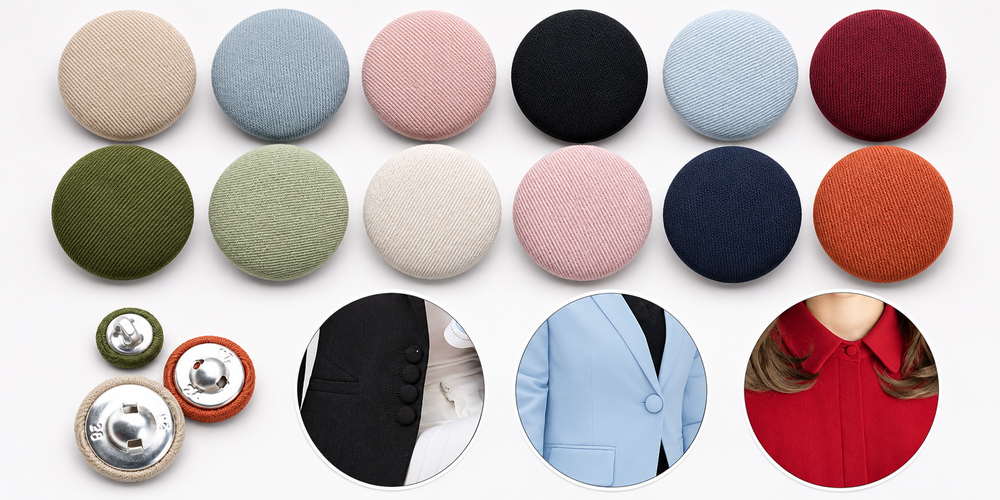
A shank-style covered button has a small metal or plastic loop on the back. During sewing, the thread passes through this loop to attach the button to the garment. Since the sewing point sits behind the button, the front stays smooth, with no visible stitch holes.
Why choose this style?
· A smooth front gives the button a neat, finished appearance.
· The fabric face can match the garment closely, making the button feel like part of the overall design.
· The rear shank keeps the sewing point out of sight.
Things to consider
· The shank needs enough clearance for the fabric layers and the way the garment closes.
· Button size and sewing position should suit the garment fabric to avoid pulling or puckering.
· For thicker fabrics, check the shank height and sewing allowance during sampling.
We recommend shank-style fabric covered buttons for tailored coats, dress coats, blazers, cardigans, dresses and fabric-covered bag details. They work especially well when the front needs to look uninterrupted and polished.
2. Eyelet or Sew-Through Fabric Covered Buttons
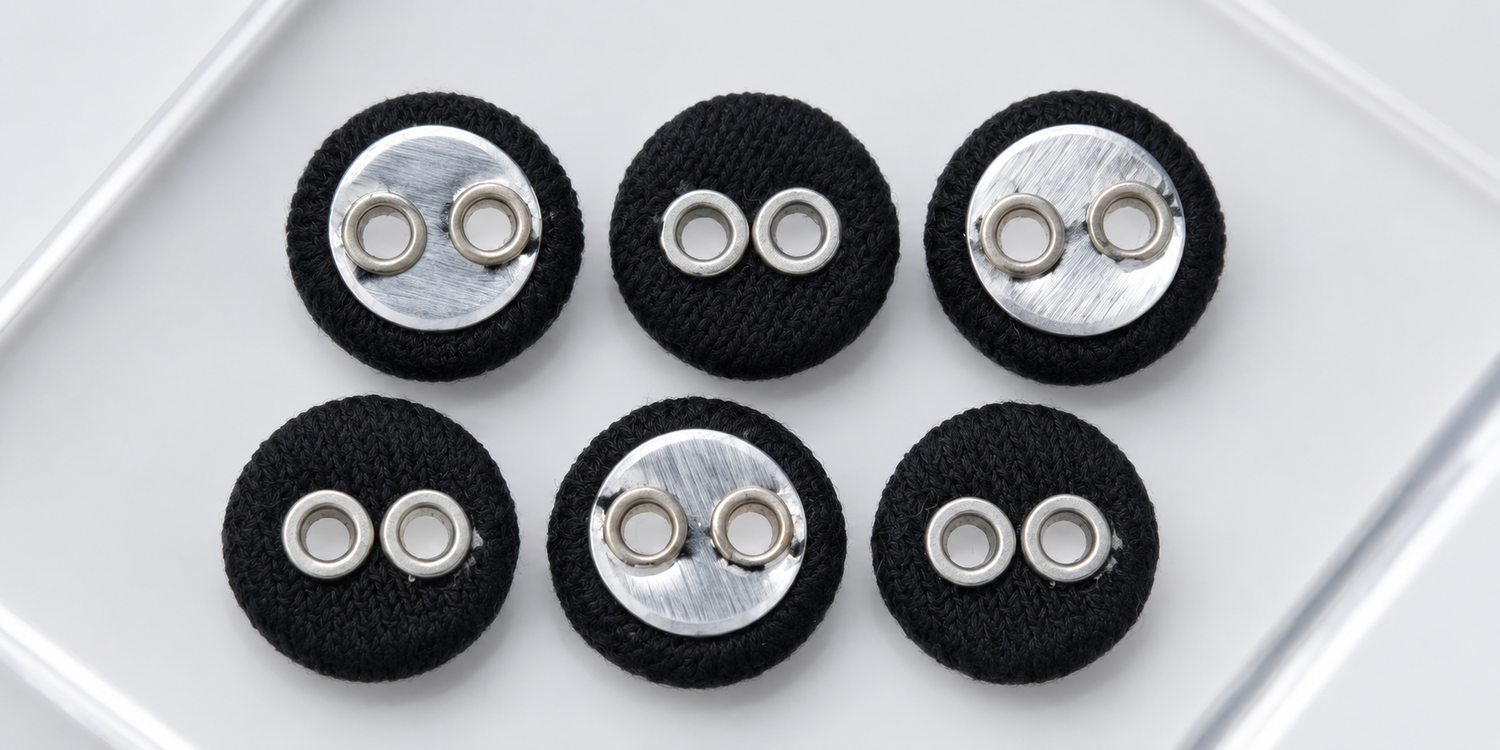
Eyelet-style covered buttons use sewing openings rather than a separate rear shank. Common versions have two or four holes, allowing thread to pass through and secure the button. Depending on the construction, the sewing openings can also be placed on the back so the front remains free of visible holes.
Why choose this style?
· Two-hole and four-hole layouts are familiar and straightforward for garment sewing teams.
· The button can be attached directly through its sewing openings.
· A covered front coordinates with the garment while keeping the fastening practical.
Things to consider
· If the sewing holes are visible on the front, their position becomes part of the button's appearance.
· Hole placement and thread path need to allow secure stitching.
· The covered fabric and button base should be checked together to avoid distortion during sewing.
This type can suit shirts, dresses, lightweight jackets, children's clothing and garments where a familiar sew-through construction is preferred.
3. Fabric-Covered Snap Buttons
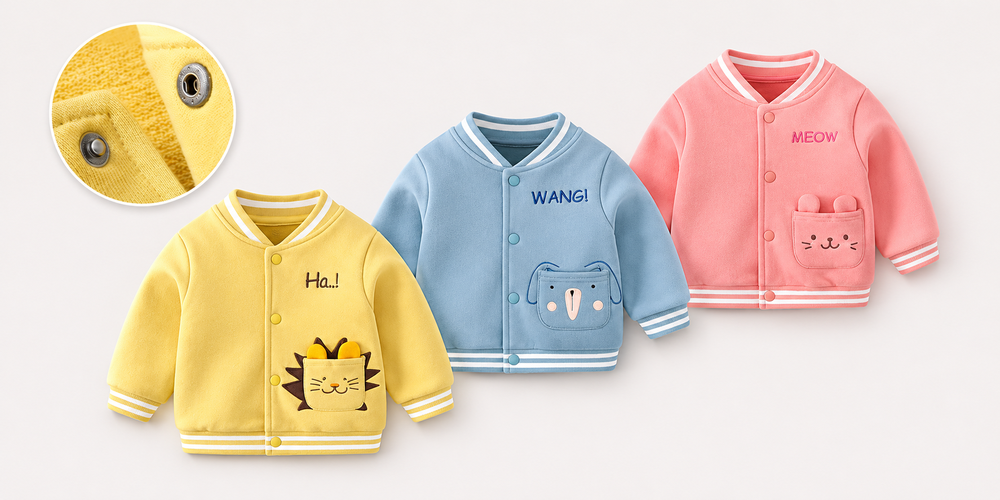
A fabric-covered snap combines a covered decorative face with a snap-fastening mechanism. It has matching male and female parts that press together to close and pull apart to open. This gives a garment or accessory a quick fastening option while allowing the visible surface to be covered in the selected fabric.
Common sizes are approximately 8 mm to 32 mm, depending on the snap design and application. The right size should be selected according to fabric thickness, fastening area and the holding force required.
Why choose this style?
· It opens and closes quickly, which is useful for frequently handled garments and accessories.
· The covered face can blend into the garment or create a coordinated decorative detail.
· It can be used on outerwear, children's clothing and bags where a practical closure is needed.
Things to consider
· Snap strength must suit the fabric. Too much force may stress delicate material; too little may not stay closed.
· Soft or stretchy materials may need reinforcement around the snap.
· The male and female parts must be aligned correctly during installation.
We would consider covered snaps for coats, jackets, children's garments, fabric accessories and bags. They are useful when a product needs quick opening and closing but the brand still wants the button face to match the fabric.
Quick Comparison: Which Type Fits Your Project?
Type | Main advantage | Potential limitation | Typical applications |
Shank-style | Smooth front; no visible sewing holes | Shank height and sewing clearance must suit the fabric | Coats, blazers, dresses, cardigans |
Eyelet / sew-through | Familiar two-hole or four-hole sewing construction | Front holes may be visible, depending on design | Shirts, dresses, light jackets, children's wear |
Covered snap | Quick press-to-close fastening | Snap strength and fabric reinforcement need checking | Outerwear, children's clothing, bags |
There is no single best construction for every garment. The right choice depends on the look you want, how often the closure will be used, fabric thickness and the sewing or installation method.
How We Choose the Right Covered Button
When we help a customer select custom fabric covered buttons, we look beyond the button itself. The garment fabric, construction and wearing experience all matter.
Start with the fabric
A thick wool coat can usually support a more substantial button construction than a lightweight blouse. Soft, stretchy or loosely woven fabrics may need extra reinforcement around the button or snap. We recommend checking the button on the actual garment material rather than judging it from a sample card alone.
Think about the front appearance
For a completely smooth fabric face, a shank style or a design with rear-side sewing openings may be suitable. If visible sewing holes are part of the intended look, a two-hole or four-hole style may work well. If quick opening and closing matters most, consider a covered snap.
Match the size to the garment
Button diameter affects appearance and function. Small covered buttons can work well on blouses and dresses, while larger sizes can create a stronger detail on coats and bags. The common approximate 8 mm to 32 mm range for covered snaps gives brands a starting point, but the final size should be checked against the actual closure area.
Review the backing and attachment
The backing determines how the button is sewn or installed, how it sits on the garment and how the fastening feels in use. We recommend confirming the backing structure and attachment method during sample review.
How We Develop Custom Fabric Covered Buttons
Development starts with the look and function you want. Once we understand the garment and intended application, we can discuss the covering fabric, button size and backing construction.
1. Share the garment or accessory reference. A photo, sketch, tech pack or physical fabric swatch helps us understand the intended look.
2. Confirm the button type: shank, eyelet / sew-through or covered snap.
3. Choose the size and fabric. Share the diameter, covering fabric, colour and any texture or pattern requirements.
4. Review the backing and installation. Confirm the shank material, hole layout or snap components, along with the garment fabric thickness.
5. Check a sample. Review fabric coverage, shape, surface appearance, attachment and fastening function before approving production.
6. Move into bulk production. Once approved, the sample becomes the reference for production inspection.
Final Thoughts: Make the Button Work with the Whole Garment
Fabric covered buttons offer a simple way to create a coordinated, polished finish. A shank style keeps the front smooth, an eyelet style offers a familiar sew-through construction, and a covered snap gives the garment a quick closure. Each type has its place; the key is matching the construction to the fabric and how the product will be used.
At WYSECN, we help clothing brands develop buttons and trims around their design and production needs. If you are looking for custom fabric covered buttons for coats, dresses, knitwear, children's clothing or bags, send us your reference image, fabric swatch or tech pack. We'll be happy to review the details and get back to you within 24 hours.
Email: sales@wysecn.com
Website: https://www.wysecn.com
WhatsApp: +86 15919919062
