
How We Control Quality for Metal Shank Buttons at WYSECN
Why Quality Control Matters
A metal shank button may be a small garment component, but it needs to do several jobs well. It should look right on the garment, stay securely attached and withstand normal handling. A clean plated surface is not enough if the shank is loose, the edges are rough or the button does not suit the fabric.
At WYSECN, we develop custom garment accessories for clothing brands, including metal shank buttons. We build quality checks into the production process, from incoming materials and forming to plating, assembly and shipment. Here is how we organise the checks and what buyers should confirm before bulk production.
1. Production Flow: From Tooling to Final Inspection
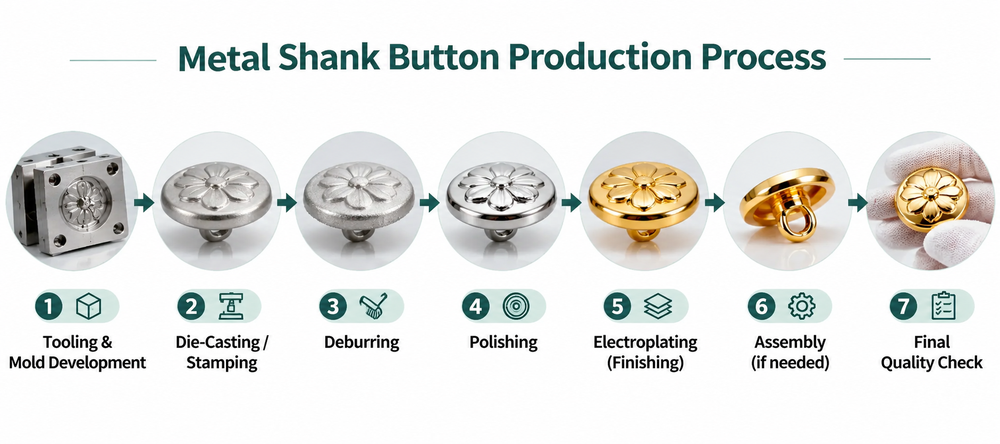
The exact route depends on the design and material. For die-cast or stamped , the main flow is:
1. Mold or tooling development– Review the drawing, dimensions, relief details, shank position and manufacturing method.
2. Die casting or stamping– Form the metal body according to the approved design.
3. Deburring– Remove excess material and unwanted edges.
4. Grinding and polishing– Refine the surface while preserving the intended shape and decorative details.
5. Electroplating– Apply the agreed metallic colour and finish.
6. Plated-part inspection– Check the plated components before assembly.
7. Assembly– Install the shank or other components and check position and attachment.
8. Cleaning and final inspection– Clean and review the finished buttons before packing.
For a new design, we recommend confirming the drawing and approved sample before bulk production. This gives production and inspection teams a shared reference for dimensions, appearance, plating colour and shank construction.
2. Five Quality Inspection Stages
We organise quality control around five stages. Each has a different purpose, and together they help reduce the chance of defects reaching the customer.
IQC – Incoming inspection: Check incoming material types, specifications, condition and components needed for assembly before production starts.
IPQC – In-process inspection: Check relevant production stages, which may include the formed button body, edge condition, surface preparation, plating appearance and shank assembly. The aim is to catch problems close to where they occur.
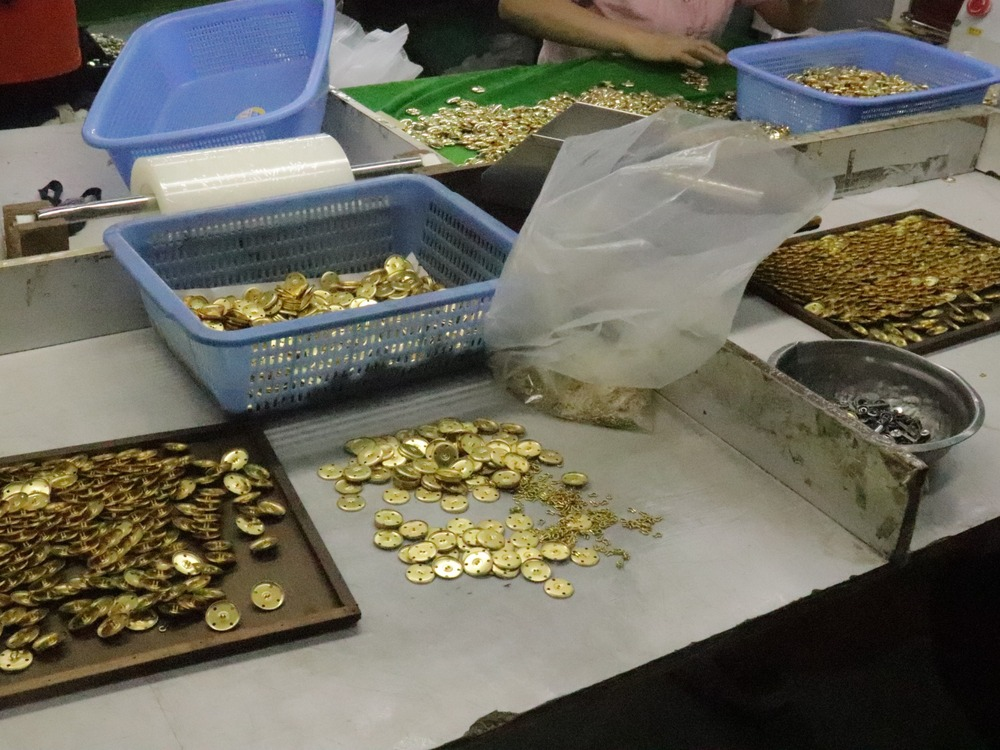
100% pre-packing inspection: Check every finished button piece by piece. Scratches, plating marks, missing components or a misplaced shank can affect garment appearance and use.
FQC – Final inspection: Review the complete product against the approved sample, drawing and order requirements. This may include appearance, dimensions, plating, shank position, assembly and agreed functional requirements.
OQC – Outgoing inspection: Before dispatch, verify order quantity, packing condition, carton labels and agreed shipping information.
These stages work best as one connected system. Final inspection is more effective when incoming materials, in-process quality and assembly have already been checked and documented.
3. Testing for Surface Durability and Button Performance
Visual inspection is essential, but some requirements need specific tests. The appropriate test depends on the button design, material, finish, garment application and buyer's requirements.
The test values supplied for this article include the following reference standards:
Salt-Spray Test
A salt-spray test evaluates corrosion resistance of the selected surface finish under specified conditions. Check for corrosion, colour change, blistering or plating damage.
Alcohol-Rub Test
An alcohol-rub test checks how the surface finish responds to repeated rubbing. Look for colour change, loss of gloss, coating damage or visible wear.
Dry-Cleaning Test
For custom buttons intended for garments that may be dry-cleaned, inspect the button after the agreed dry-cleaning process. Review appearance, plating condition, attachment and surface changes.
Pull Test
A pull test evaluates the strength of the shank or the attachment between the shank and button base, depending on the test setup. The required force should be defined by the customer according to the garment application.
Pressure Test
A pressure test can be used when the button design or application has a defined pressure or structural requirement. The test force and acceptance criteria should be agreed before testing.
4. What We Pay Attention to on a Metal Shank Button
For a metal shank button, the shank is just as important as the decorative front. The back structure needs to suit the garment fabric and sewing method.
During inspection, we recommend paying attention to:
·Shank position: Correctly located and aligned with the button body.
·Attachment security: Firmly assembled, with no visible looseness.
·Edge condition: No sharp burrs or rough edges that could damage fabric.
·Plating appearance: Front, sides and visible back areas meet the approved finish standard.
·Shape and dimensions: Match the approved sample and drawing.
·Sewing suitability: Shank opening and clearance suit the intended thread and garment thickness.
For thick coats, structured jackets or heavier fabrics, shank height and sewing clearance deserve particular attention. Check the button on the actual garment material during sample approval.

5. Agree on Acceptance Criteria Before Bulk Production
Before production starts, buyers and manufacturers should agree on:
·Approved button drawing and reference sample.
·Material and surface-finish requirements.
·Critical dimensions and acceptable tolerances.
·Shank structure, position and attachment requirements.
·Appearance criteria for scratches, plating marks and colour variation.
·Required tests, methods and acceptance limits.
·Inspection stages and any agreed sampling level.
·How non-conforming products will be identified, separated and handled.
If an order requires an AQL sampling plan or a specific test level, write the agreed standard into the purchase specification. Do not assume a reference value automatically applies to every product or batch.
6. What Buyers Can Send Us for a Faster Quality Review
If you are developing custom metal shank buttons, the following information will help us review the project:
·Button drawing, 3D file or reference sample.
·Button diameter, thickness and target weight, if specified.
·Material and plating colour.
·Shank dimensions and required sewing clearance.
·Garment type and fabric thickness.
·Logo, relief or decorative-detail requirements.
·Order quantity, sample requirements and target delivery date.
·Any required salt-spray, alcohol-rub, dry-cleaning, pull or pressure tests.
The clearer the requirements are at the beginning, the easier it is to develop a suitable sample and establish a consistent production standard.
Final Thoughts: Quality Has to Be Checked at Every Stage
For metal shank buttons, quality combines appearance, structure, attachment and performance. Mold development, die casting or stamping, deburring, polishing, electroplating, plated-part inspection, assembly, cleaning and final inspection all contribute to the finished result.
At WYSECN, we work with clothing brands to develop custom buttons and garment accessories around their design and production needs. If you are planning a new metal shank button project, send us your drawing, reference image, garment fabric or technical requirements. We’ll be happy to review the details with you and get back to you within 24 hours.
Email: sales@wysecn.com
Website: https://www.wysecn.com
WhatsApp: +86 15919919062
